
Blog
Inside the FBI: Co-Deputy Director Christopher Raia on AI, Foreign Influence and a Changing Bureau
By Jason Pack
The FBI is changing.
Over the past 18 months, the Bureau has undergone significant changes in leadership, priorities, structure, technology and the relationship between FBI Headquarters and the field. At the same time, agents and analysts are confronting an increasingly complicated threat environment that includes foreign influence operations, artificial intelligence, cybercrime, violent crime and threats to America’s elections.
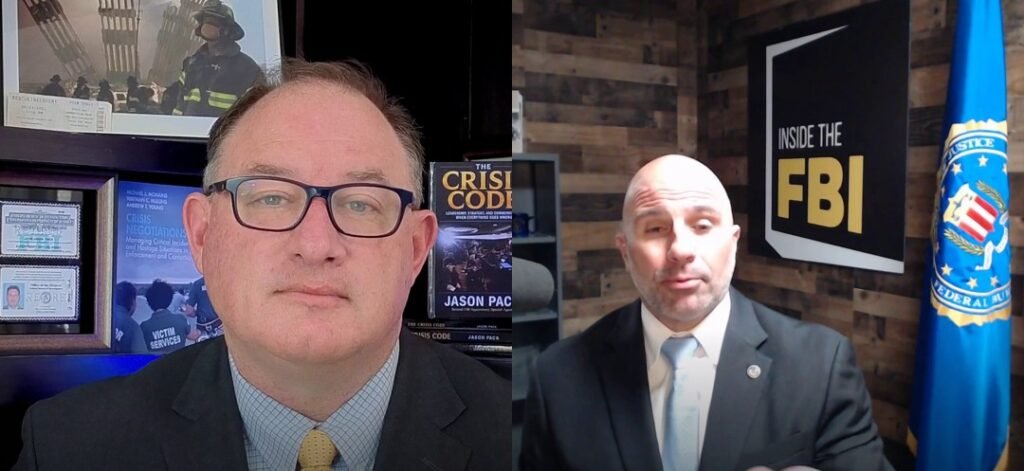
I recently had the opportunity to sit down with FBI Co-Deputy Director Christopher Raia for the Society of Former Special Agents of the FBI to talk about those issues and where the Bureau goes from here.
Before getting into that conversation, however, I believe some context is important.
Change Has a Human Impact
The changes taking place inside the FBI are not simply organizational boxes being moved around on a chart.
People have been affected.
Some people who devoted years, and in some cases decades, of their lives to the FBI have been genuinely and negatively affected by decisions made during this period of change. The impact has extended to their families. Some of those people are friends and former colleagues of mine.
Their service matters. Their experiences matter. They should not be forgotten as we discuss the future of the FBI.
At the same time, the Bureau continues to change, and the men and women who served there deserve an opportunity to hear directly from the people helping lead it.
That was the purpose of my conversation with Chris Raia.
It was not to tell anyone what to think about current FBI leadership or the direction of the Bureau. It was not an endorsement of every decision that has been made.
I wanted to ask questions, give Chris an opportunity to explain what is happening from his perspective, and allow current and former members of the FBI family to hear his answers directly.
Watch the interview. Listen carefully. Consider his answers alongside your own experience and perspective.
Then form your own opinions.
Artificial Intelligence and the Future of Law Enforcement
One of the major issues we discussed is artificial intelligence and what it means for the FBI.
AI is rapidly changing the environment in which law enforcement operates. The same technology that can help investigators analyze information and work more efficiently can also be used by criminals and foreign adversaries.
That raises questions that extend well beyond technology itself. How does the FBI adapt? How does it prepare its workforce? How will AI change investigations? What new vulnerabilities will emerge as the technology becomes more sophisticated and accessible?
Raia discusses how the Bureau is approaching that changing environment and the role technology will play in the FBI’s future.
Foreign Influence and the Midterm Elections
We also discussed foreign influence and the threat posed by adversaries seeking to influence Americans and the political process.
Election security has become an increasingly complicated national security issue. Foreign actors have more tools available to them, while artificial intelligence and increasingly sophisticated digital platforms create new opportunities for influence and deception.
With the midterm elections approaching, I asked Raia about the threat and how the FBI views its role in protecting the country from foreign influence while operating in an environment where election-related investigations can quickly become politically contentious.
It is an important conversation, regardless of your politics.
How Has the FBI Changed?
For those of us who spent much of our professional lives inside the FBI, perhaps the most personal part of the conversation concerns the Bureau itself.
What has changed during the past 18 months?
What does the relationship between FBI Headquarters and the field look like today?
Where are the Bureau’s priorities moving?
And what do those changes mean for the agents, analysts and professional staff who still walk into FBI offices every morning and do the work?
Those questions matter because an organization like the FBI is ultimately more than its leadership.
I served as an FBI special agent for 21 years and worked under multiple FBI directors. I did not agree with every decision made by every director I served under. I never expected to.
FBI agents tend to be independent and analytical people. We ask questions. We challenge assumptions. We look at evidence and draw conclusions.
That independence is part of the culture.
Leadership changes. Administrations change. Priorities change.
The mission remains.
Don’t Lose Sight of the People Doing the Work
This is the part of the conversation I hope does not get overlooked.
Thousands of FBI agents, analysts and professional staff across the country will get up tomorrow morning and go to work.
They will investigate violent criminals.
They will work cases involving children who desperately need someone fighting for them.
They will confront terrorists, spies, cybercriminals and fraudsters.
They will work alongside police officers, sheriff’s deputies and other state, local and federal partners.
And when something terrible happens in an American community, many of them will leave their families and go wherever they are needed.
Those are the people I know.
I was one of them for 21 years.
The FBI is an institution, but institutions ultimately depend on people. Whatever disagreements exist over leadership, policy or the direction of the Bureau, we should be able to recognize the service of the men and women carrying out the mission.
That includes those serving today.
It also includes those whose careers and families have been negatively affected by recent changes.
Acknowledging one does not require dismissing the other.
Hear the Answers. Make Your Own Decision.
I expect people will come away from my conversation with Chris Raia with different reactions.
Some will agree with what they hear.
Some will disagree.
Some will probably have more questions.
That’s OK.
The purpose of an interview like this should not be to hand the audience a conclusion. It should provide information that helps people reach their own.
So I encourage you to watch the entire conversation.
Listen to what FBI Co-Deputy Director Christopher Raia has to say about artificial intelligence, foreign influence, the midterm elections, changes inside the FBI and where he believes the Bureau is headed.
Consider his answers in light of your own experiences and what you know.
Then make up your own mind.
Through whatever changes come next, I hope we never lose sight of the people who have carried the FBI’s mission in the past and those who continue carrying it today.
Jason Pack is a retired FBI supervisory special agent who served with the FBI for 21 years. He is CEO of Media Rep Global Strategies and works in crisis communications, public safety and media strategy. He conducted this interview with FBI Co-Deputy Director Christopher Raia for the Society of Former Special Agents of the FBI.