
Blog
Four Months Later: The Hidden Reality of Missing Person Cases
by Jason Pack, retired FBI Supervisory Special Agent
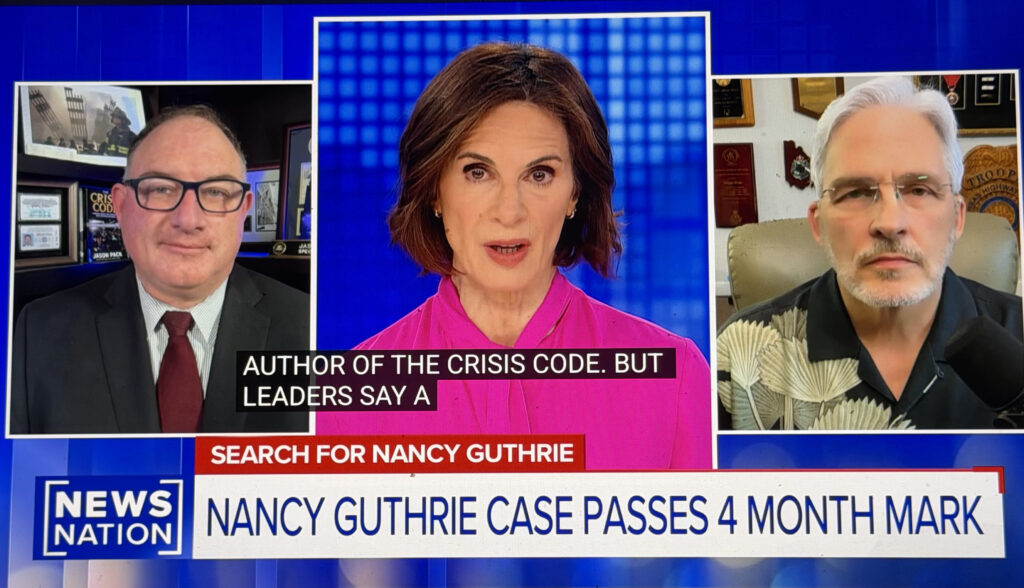
This week, I joined Elizabeth Vargas Reports on NewsNation to discuss the disappearance of Nancy Guthrie, a case that has captured national attention and remained in the public eye for months.
As a retired FBI Supervisory Special Agent who worked child abductions, missing person cases, hostage situations, and other major investigations, I am often asked about the investigative side of these cases. The public naturally wants answers. The media wants updates. Family members desperately want closure.
What is often overlooked is the emotional toll that uncertainty takes on the families left behind.
Because Savannah Guthrie is a well-known public figure, the world is watching this case unfold in real time. Every development is analyzed. Every search effort is scrutinized. Every rumor is amplified.
Most families facing the disappearance of a loved one do not have cameras following them. They suffer in relative silence.
Yet the pain is often the same.
One of the most difficult aspects of a missing person investigation is the space between hope and fear. Families wake up each morning wondering if today will be the day they receive answers. They replay conversations. They revisit memories. They search for clues in places where there may be none.
For investigators, that reality is never far from mind.
Behind every case number is a family whose life has been disrupted. Detectives, agents, analysts, search teams, and volunteers understand that the outcome of their work affects real people living through some of the worst days of their lives.
That responsibility weighs heavily on those involved.
The public often sees search warrants, press conferences, and search operations. They do not always see the long hours spent reviewing tips, analyzing evidence, coordinating resources, and making difficult decisions with limited information. Missing person investigations can be painstaking and methodical. Progress is not always visible to the public.
Patience can be difficult for families and communities, but thorough investigations require investigators to follow facts rather than assumptions.
The longer a case remains unresolved, the more challenging it becomes emotionally for everyone involved. Families continue searching for answers. Investigators continue searching for evidence. Communities continue hoping for good news.
Cases like this also remind us that thousands of families across America are living with similar uncertainty. Their stories may never lead a national newscast, but their pain is no less real.
During my appearance on Elizabeth Vargas Reports, I was honored by the kind mention of my new book, The Crisis Code. While the book explores leadership, communication, and decision-making during crises, one of its central themes is that every crisis involves people. Whether the crisis is a natural disaster, a terrorist attack, a major public safety event, or a missing person investigation, leaders must never lose sight of the human beings at the center of the story.
As this case continues, my thoughts remain with Savannah Guthrie and her family, and with every family still waiting for answers about a missing loved one.
In the end, investigations are about more than solving cases. They are about serving people during some of the most difficult moments of their lives.