
Blog
Everyone’s Asking If the FBI Will Take Over the Nancy Guthrie Case. That’s the Wrong Question.
Newly appointed Attorney General Todd Blanche appeared on NBC’s “Meet the Press” on Sunday, addressing the Nancy Guthrie investigation for the first time since Pima County investigators released two ransom notes purportedly sent by those responsible for her disappearance. Asked directly whether the FBI should take over the case, Blanche said a full takeover isn’t “the best course,” while stressing that federal investigators are providing “as much help as possible,” including manpower and forensic assistance. “Whether we come in with sharp elbows and take it over, that’s not necessarily the right thing to do for her or for anybody,” he said.
As a retired FBI Supervisory Special Agent who spent 21 years in the Bureau, and who served as the FBI’s global spokesman during some of the most major crises in modern law enforcement history, I think Blanche gave the right investigative answer. What I want to talk about is the communications problem sitting underneath it.
The legal answer was right. The public wasn’t asking a legal question.
Blanche’s answer reflects real jurisdictional nuance: the FBI has concurrent jurisdiction here given the possibility this is a federal kidnapping, meaning the Bureau could take the lead if it chose to. Full takeovers are rare, and for good reason. It’s not the standard path even when federal jurisdiction is clear, and both agencies typically keep working a case together until the facts support state charges, federal charges, or both, at which point prosecutors from each side sit down and decide who carries it forward. That’s the same dynamic playing out right now in the Luigi Mangione case. It’s not a turf fight. It’s how these cases work.
But that’s not the question the public is actually asking, and that’s the trap. When a government official answers the legally correct question instead of the emotionally live one, the answer lands as evasive even when it’s accurate. This is a recurring failure point I see in agencies under pressure: they defend the process when the public wants an answer to the feeling.
Everybody wants the FBI’s horsepower until it’s parked in their driveway.
What the public is actually asking, and why it’s a trust question, not a jurisdiction question
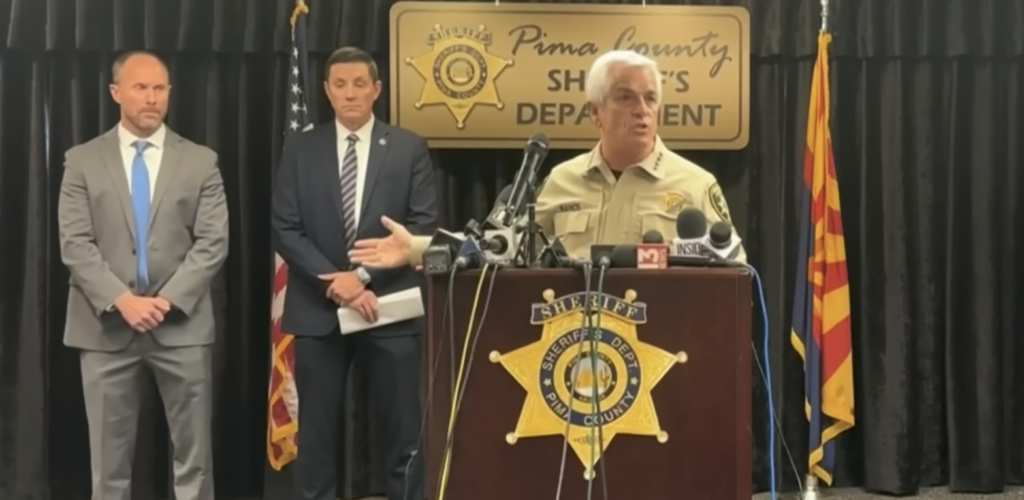
Even with a real investigative win, the doorbell video that gave investigators their first solid lead, people still want to know something simple: if the FBI has these tools and this experience, why don’t we have more answers yet? That’s more of a confidence question than a legal one. Sheriff Nanos has said publicly his department has a good relationship with the FBI and is accepting federal help. If that’s true, the slow pace may not be about one side blocking the other. What it it really shows is that finding someone is harder than getting one piece of video, no matter how good.
This is the gap crisis communicators live in. The facts can be defensible. Public trust continues to erode, because people doubt that the facts are correct. It’s built on whether the public believes the people delivering those facts are being straight with them.
The real lesson: getting the small facts wrong costs you the big facts
Here’s where this case becomes a genuine cautionary tale for anyone in this field. FBI Director Kash Patel has said Pima County kept federal agents out of the investigation for four days early on. The sheriff’s department pushed back hard, saying the FBI was notified promptly and coordination began without delay. Both sides believe their own account. Neither has offered public evidence that settles it.
I’ve said this in trainings for years: even the smallest factual inconsistency harms institutional credibility. When the country’s top federal law enforcement official and a county sheriff’s department can’t agree on something as basic as when a phone call was made, the public doesn’t conclude “reasonable people disagree.” They conclude “if they can’t get that straight, why would I trust them on anything harder.” That can be a real trust problem, and it’s entirely preventable with coordinated messaging before either side goes on camera.
This investigation is being handled about as well as a shared, high-pressure, nationally-watched case can be. The damage is happening more on the communications side, one contradicted timeline and one ad-hoc interview at a time. When two agencies share a case, they need one shared version of the facts before anyone speaks publicly. Otherwise, you hand the public a reason to doubt you both.
–Jason Pack is a retired FBI Supervisory Special Agent and former FBI global spokesman who now runs Media Rep Global Strategies, a crisis communications firm helping agencies and organizations get ahead of exactly this kind of breakdown before it costs them public trust.