
Blog
What the Guthrie Ransom Notes Tell Us
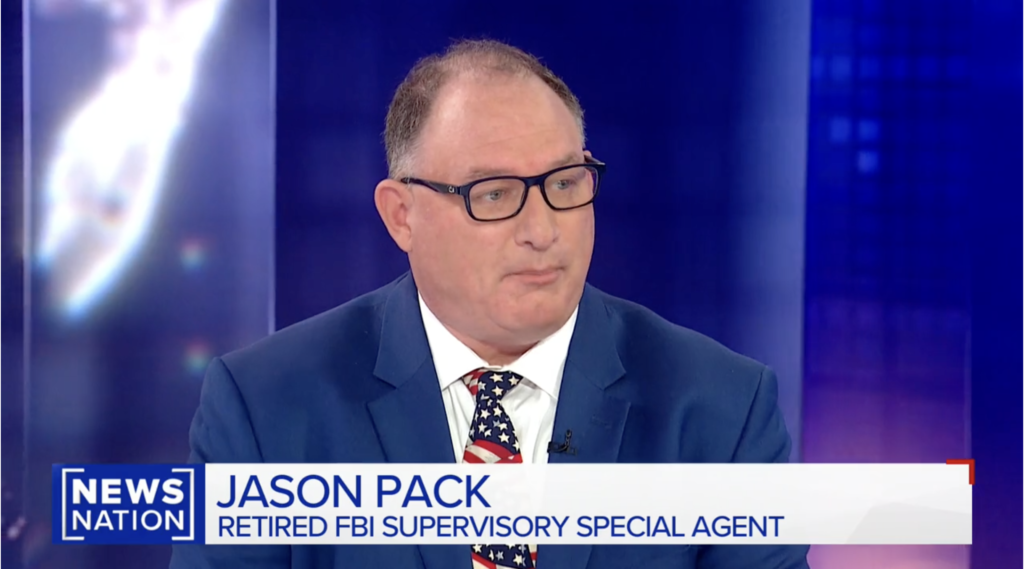
by Jason Pack, Retired FBI Negotiator and Supervisory Special Agent | Author, the Crisis Code | www.mediarep.us
The Pima County Sheriff’s Department released two notes today in the disappearance of Nancy Guthrie. Both were sent to KOLD-TV 13 News in Tucson, the first on Feb. 2 and the second on Feb. 6. Both came through the station’s public news tip form. Portions of both are blacked out, so everything below applies to the parts we can see.
Somewhere in Tucson tonight, investigators hope someone is standing at a sink thinking about a man they know. They have been thinking about him since February. That person is who today’s release was written for.
Here is what is in the notes.
The first one says the writer has Nancy. It says she is safe but scared. It demands $4 million in bitcoin by a Thursday deadline and $6 million by the following Monday. After that, it says, she dies. It says there will be no negotiation and no further contact.
There is no proof of life in it. No photo. No phrase only Nancy would know to say. A man with something to sell shows you what he has. This one sent a promise and hoped nobody would ask.
He also shut his own door. He wrote that he would not be contacted and would not negotiate. Sit with that for a second. A man who wants $4 million just removed every way to receive it, confirm it or arrange a handoff. People who want money do not do that.
The structure of the demand could be borrowed from somewhere else. A price that climbs on a schedule is the language of computer ransomware. It is not how someone behaves when he is holding an 84-year-old woman in a room. Anyone actually holding a hostage wants the fastest, simplest ending he can get. Every extra day is another day to get caught.
One line in that note carries real weight. It describes a white smartwatch on the floor at the foot of her bed and a floodlight destroyed in her backyard. He knew about the watch on the floor. Almost nobody did. That is not something you read in the newspaper.
Notice what that detail is, though. It is knowledge of the house. It is not knowledge of Nancy.
Four days later the same tip form produced a completely different letter. It is written to the whole family instead of to Savannah. It says Nancy died shortly after she was taken, that her health was worse than they understood, that it was probably her heart. It says she is buried in nature. It says nothing the family could have done would have changed anything. It apologizes.
The money is simply gone. No demand. No offer to sell a location. Nothing. People motivated by money do not walk away from $4 million when the plan falls apart. They try to salvage something. This writer asked for nothing at all.
Read that second letter again and look for a person doing an action. She perished. She is buried. Nobody does anything anywhere in it. That is how people write about things they do not want to own.
He wrote the family a letter about finding peace. He did not tell them where she is. That is not mercy. That is a man talking to himself.
The largest problem with both notes is where they went. A kidnapper’s first demand is silence. No police. No press. Control the room. This writer sent his letters to local and national newsrooms, twice, and never once asked the family to keep quiet. A man in hiding does not knock on the door of a television station. This one knocked twice.
I get asked about statement analysis and what the language says about the writer, and the honest answer is less than people want. There are about 230 words in the first note and 85 in the second. That is not enough text to support a guess at his age, his schooling or his intelligence, and anyone offering you one is performing. The single misspelling everyone will point to appears once against three correct spellings of the same word. That is a typo, not a pattern.
In my view, two things the language does support: He writes like a native English speaker. The idiom and the small connecting words are all in the right places, and at this length that is hard to fake.
And he writes like someone who spends his day sending business email. Money in the amount of. Payment that will need to be paid by. Wanting to have this completed. That is office language, and it sits strangely against the threats, which sound like they came off a television screen. If you knew this man, that is the part you would recognize. Not his vocabulary. His habits.
The second note is also the cleaner of the two. Better punctuation, no errors, a steadier arc. Same voice, calmer hand. Four days had passed and no money had moved.
What the Sheriff’s Department did today is a little unusual and worth understanding. They published the writer’s words on purpose and asked the public to recognize the voice. Their release says the notes carry distinctive patterns of word choice and phrasing, and that a friend, coworker, classmate or family member may recognize how this person talks. That is a real technique with a real track record. It is also what you reach for when the technology has taken you as far as it can go.
They said as much in plain sight. Investigators are pursuing every technical lead, the release says, and then immediately, community members remain a vital resource.
It is worth noting that the department stops short of vouching for these notes. It says they purport to have been written by kidnappers. Earlier this summer the FBI said some ransom communications in this case were judged illegitimate while others remain under investigation. Nobody has publicly placed these two in either column. But no agency spends its six month release, its reward push and its entire public appeal on documents it has already ruled out.
Two other things in that release matter. They describe an unidentified male who knows what happened to Nancy. Not a person of interest. Not someone who may have information. Knows.
And they say two videos from her doorbell camera, which may be from separate days, indicate he took steps to prepare. That is a careful sentence and it is worth reading twice. It tells us this was planned. It does not tell us Nancy was chosen in advance, and the department was deliberate about not saying so.
They also published a list of things to watch for in someone you know. Mood changes. Appearance changes. Unexplained injuries. Broken routines. Sudden departures. A car suddenly cleaned or repaired. The last two items are the ones I would sit with. Unexplained interest, or disinterest, in her neighborhood. Intense interest, or disinterest, in the investigation, or unexplained knowledge of the situation. They wrote it both ways on purpose. The man who cannot stop watching the coverage and the man who changes the channel are both recognizable to whoever lives with him.
Near the end of that release is a paragraph most people will skip. It acknowledges that people with information sometimes stay quiet, and it names why. Close relationships. Fear for their own safety. Concern for their reputation and their standing among friends. Then it says loyalties change, people change, and it is not too late.
That paragraph is not written to the public. That is a letter to one or two specific people, printed in a press release because investigators have no other way to reach them.
Six months in, the department still will not say whether Nancy is alive. They will not confirm or reject the second note’s claim that she died. Their stated goal remains locating her and giving her family answers. That is the right call and a hard one to hold in public.
My read is that one person wrote both notes. Same channel, same habits, same distance from responsibility. Whether that person took Nancy or watched the coverage and decided to insert himself is the open question, and the watch on the floor is the thread that answers it.
Somebody knows this voice.
Six months is a long time to carry something. It is not too long to set it down.
Anyone with information can call 1-800-CALL-FBI or 88-CRIME. You can remain anonymous.
Jason Pack is a retired FBI Supervisory Special Agent and the founder of Media Rep Global Strategies. He is the author of The Crisis Code. mediarep.us